notadictionary.com
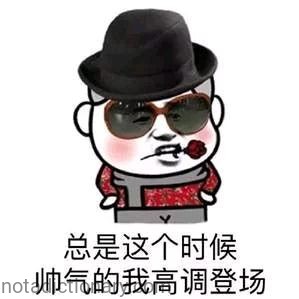
总是这个时候
→ “Always at this time — like clockwork, you show up just when it's expected.”
总是 zǒng³ shì⁴ = always / constantly. 总 (zǒng) means 'total' or 'overall,' and 是 (shì) is the verb 'to be.' Together, it means 'always.'
总 zǒng³ = total, overall, or always.
是 shì⁴ = to be, to exist.
这个 zhè⁴ ge = this. 这 (zhè) means 'this,' and 个 (ge) is a measure word often used with people or things.
这 zhè⁴ = this.
个 ge = a measure word, often used for people or things.
时候 shí² hou = time / moment. It literally means 'when' or 'at that time.'
时 shí² = time, hour.
候 hou = wait, occasion, or moment.
notadictionary.com
帅气的我高调登场
→ “The cool me makes a flashy entrance — like a superhero walking onto the stage.”
帅气 shuài⁴ qì⁴ = handsome / cool. 帅 (shuài) means 'handsome' or 'cool,' and 气 (qì) means 'appearance' or 'style.'
帅 shuài⁴ = handsome, cool, or leading.
气 qì⁴ = appearance, style, or breath.
的 de = a possessive particle — 'of' or 'the.' It connects 帅气 (cool appearance) to 我 (me).
我 wǒ³ = I / me. The speaker referring to themselves.
高调 gāo¹ diào⁴ = flashy / ostentatious. 高 (gāo) means 'high,' and 调 (diào) means 'tone' or 'style.' Together, it means 'making a big splash.'
高 gāo¹ = high, tall, or great.
调 diào⁴ = tone, style, or adjustment.
登场 dēng¹ chǎng³ = make an appearance / step onto the stage. 登 (dēng) means 'to climb' or 'to ascend,' and 场 (chǎng) means 'stage' or 'field.'
登 dēng¹ = to climb, ascend, or enter.
场 chǎng³ = stage, field, or event.