Italian usage

🔥 Italian usage
⚡ Snippet

Stare sui coglioni — when not to use it

Immagina se arrivavo così!
Imagine if I showed up like this!

Stare sui coglioni is one of the strongest everyday ways to say you can’t stand someone. It’s common in casual speech, especially among friends, but it’s very vulgar. In almost every public or professional situation, Italians switch to softer expressions like dare fastidio or essere pesante.

📌 Use instead

  • Mi dà fastidio.He bothers me.
  • È pesante.He’s annoying / a bit much.
  • Mi secca.He gets on my nerves.
  • Mi infastidisce.He irritates me. (more formal)
🔥 Italian usage
⚡ Snippet

Carta — one word, many meanings

Unlike English, Italian uses carta as the base word for many kinds of cards because its original meaning is paper. The context almost always tells Italians which carta you mean.

You’re in Italy for the first time. At the café, the waiter asks:
Carta o contanti?
Card or cash?

Later, a friend says:
Hai la carta d’identità?
Do you have your ID card?

Then you walk into a game night:
Tocca a te. Gioca una carta.
Your turn. Play a card.

  • Carta di creditoCredit card
  • Carta da giocoPlaying card
  • Carta d’identitàID card
  • Carta igienicaToilet paper
🔥 Italian usage
⚡ Snippet

Di meno — “less”

Two friends check the bill after dinner. One smiles and says:
Questo mese spendo di meno.
This month I’m spending less.

📌 Use di meno when you simply mean “less”—without comparing it to anyone or anything.

  • Spendo di meno.
    I spend less.
  • Dormo di meno.
    I sleep less.
  • Lavoro di meno ad agosto.
    I work less in August.
🔥 Italian usage
⚡ Snippet

Di più — “more” | Italian usage

Imagine your friend walks out of a store with three shopping bags. “Another jacket?”
They grin and say:
Spendo di più per la qualità.
I spend more for quality.

📌 Use

  • Spendo di più.
    I spend more.
  • Studio di più.
    I study more.
  • Mangio di più in inverno.
    I eat more in winter.

🧠 Remember

Use di più when you simply mean “more”—without comparing it to someone or something.
But if you say more than…, drop di before più:
Spendo più di te.
I spend more than you.

🔥 Italian for Travelers
📝 Post

Vabbè — the tiny word that does everything

No vabbè! → No way! Seriously?! Ma vabbè! → Come on! / Give me a break!
No vabbè! → No way! Seriously?!
Ma vabbè! → Come on! / Give me a break!

Imagine two friends missing a bus.

“The bus is gone.”
One shrugs, smiles, and says: Vabbè. Andiamo a piedi.
Oh well. Let’s walk.

📌
Vabbè, pazienza.
Oh well, never mind.

Vabbè, ci vediamo.
Alright then, see you.

Ma vabbè!
Come on! / Oh, give me a break!

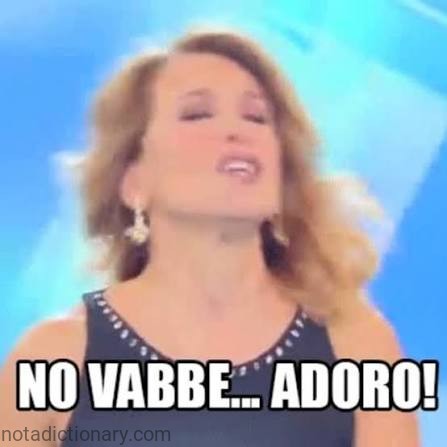
If you spend a day in Italy, you’ll probably hear vabbè dozens of times. It’s an everyday conversational filler that can mean “oh well,” “alright then,” or “come on,” depending on the tone. In formal writing, va bene is preferred. On Italian social media, “No vabbè…” has become a classic reaction opener. People say it before sharing amazement, excitement, or disbelief—just like the meme above: “No vabbè… adoro!” (“No way… I love it!”). It has become part of the rhythm of everyday Italian conversation, especially among younger speakers.

1 2 3