notadictionary.com
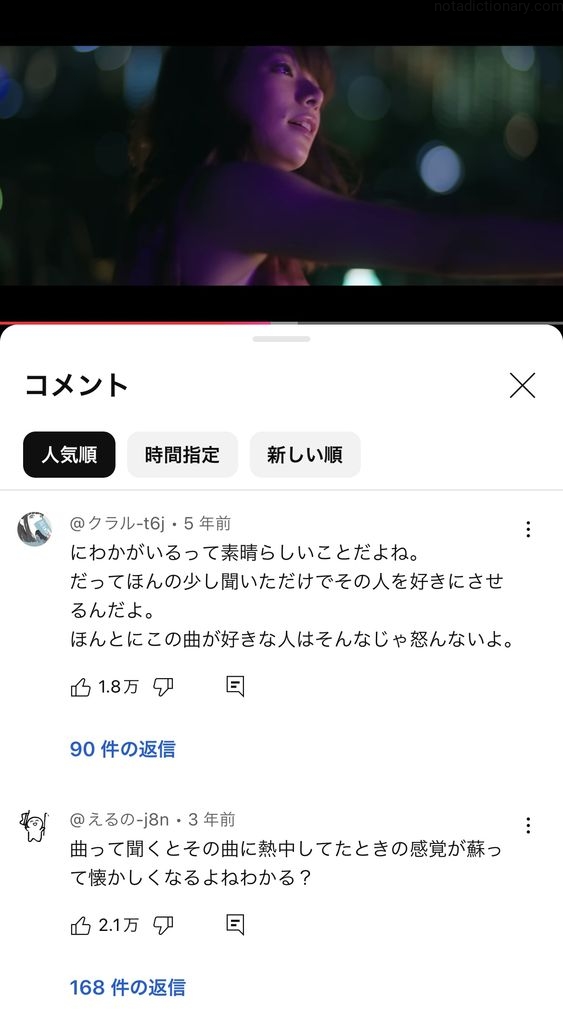
にわかがいるって素晴らしいことだよね。だってほんの少し聞いただけでその人を好きにさせるんだよ。ほんとにこの曲が好きな人はそんなじゃ怒んないよ。
→ “It's amazing that there are new fans, right? Because you can make someone like you just by having them listen to a little bit. Seriously, people who really like this song won't get mad at that.”
にわか niwaka = newbie / newcomer (n.)
が ga = particle indicating subject or focus (particle)
いる iru = to exist / to be present (v.)
って tte = contraction of 'to' (informal connector particle)
素晴らしい subarashii = wonderful / amazing (adj.)
こと koto = thing / matter (noun)
だ da = copula 'is' (verb)
よね yo ne = right? / isn't it? (sentence-ending particle combination)
だって datte = because / since (conjunction)
ほんの honno = just a tiny bit / only (adverbial phrase)
少し sukoshi = a little / slightly (adv.)
聞い kui = hear / listen (v. stem)
ただけ dake = only / just (postposition)
で de = by means of / with (particle)
その sono = that / the (determiner)
人 hito = person (n.)
を o = particle marking direct object (particle)
好き suki = like / fond of (adj.)
に ni = towards / in the direction of (particle)
させる saseru = to make / to cause (causative verb form)
んだよ ndayo = (explanatory) it is... you see! (sentence ending)
ほんとに hontō¹ ni = really / truly (adverb)
この kono = this (determiner)
曲 kyoku = song / tune (n.)
が ga = particle indicating subject or focus (particle)
好きな suki na = who likes (relative clause modifier)
人 hito = person (n.)
は wa = topic marker particle (particle)
そんな sonna = such / that kind of (determiner)
じゃ ja = contraction of 'de wa nai' (is not) (colloquial)
怒んない okonnai = won't get angry / doesn't get mad (colloquial negative)
よ yo = emphatic sentence ending particle (particle)
notadictionary.com
曲って聞くとその曲に熱中してたときの感覚が蘇って懐かしくなるよねわかる?
→ “When you listen to a song again, the feeling from when you were obsessed with that song comes back, and it makes you nostalgic, right? You get it?”
曲 kyoku = song / tune (n.)
って tte = quotative/informal connector particle (particle)
聞 ki = listen / hear (v. stem)
と to = if / when (conditional particle)
その sono = that / the (determiner)
曲 kyoku = song / tune (n.)
に ni = on / towards / into (particle)
熱中 netsuchū¹ = obsession / deep involvement (n.)
熱 netsu = heat / passion
中 chū¹ = in the middle of / during
して shite = doing / have done (conjunctive form of suru)
た ta = past tense marker (verb ending)
とき toki = time / moment (n.)
の no = possessive / genitive particle (particle)
感覚 kankaku = feeling / sensation (n.)
が ga = particle indicating subject or focus (particle)
蘇 yomigaeru = to revive / to come back (v.)
って tte = quotative/informal connector particle (particle)
懐 natsukashiku = nostalgic (adj. -ku form)
かしく kashiku = nostalgically (part of adj.)
なる naru = to become / to turn (v.)
よね yo ne = right? / isn't it? (sentence-ending particle combination)
わかる wakaru = to understand / to get it (v.)
? = question mark (punctuation)