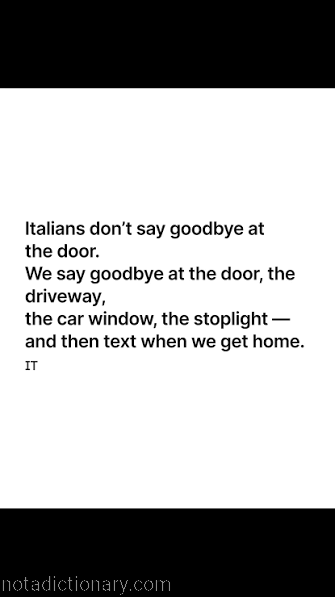
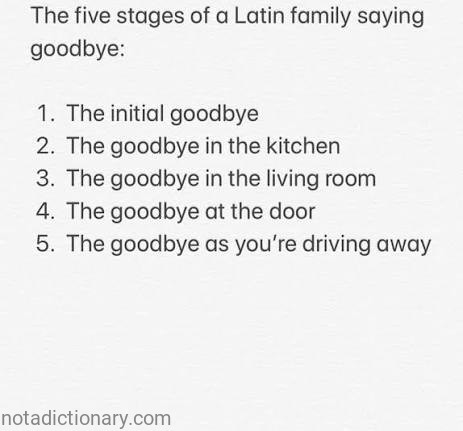
Italian farewells, ranging from casual to dramatic
Not all farewells are equal! Context is everything in Italian.
Casual & Friendly:
✅ Ciao = Hi/Bye (Informal, temporary, friends/family)
✅ Ci vediamo / Ci si vede = See you (Very common, implies future meeting)
✅ A dopo / A più tardi = See you later (Specific timeframe)
✅ Buona giornata = Have a good day (Polite but warm, used when parting during the day)
✅ Buonasera = Good evening (Formal/Polite, used after ~4 PM)
Slang & Regional:
✅ Salve = Hello/Goodbye (Neutral, semi-formal, safe for acquaintances)
✅ Bella / Bello = Bye (Very informal, youth slang, short for “Ciao bella/bello”)
✅ Stammi bene = Take care (Literally “Stay well”, affectionate)
✅ Un abbraccio = A hug (Warm closing for letters/messages or close friends)
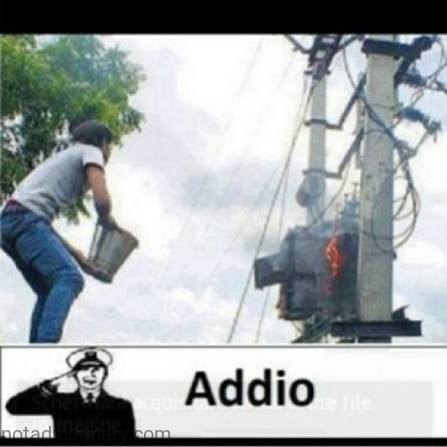
️ Addio = Farewell (Final, dramatic, permanent). Using addio for friends is hyperbolic humor — unless you’re moving to another continent!’
Formal & Professional:
✅ Arrivederci = Goodbye (Standard formal, implies seeing again)
✅ ArrivederLa = Goodbye (Very formal, respectful, use with elders/superiors)
✅ Distinti saluti = Best regards (Written only, emails/letters)
✅ Cordiali saluti = Kind regards (Written only, standard business closing)
Dramatic & Emotional:
😢 Addio = Farewell forever (Finality, death, permanent separation)
😢 Non ti vedrò più = I won’t see you anymore (Literal, sad)
😢 Fai buon viaggio = Have a safe journey (Used when someone is leaving for a long time)
Common Mistakes to Avoid:
Buongiorno as goodbye → Only use Buona giornata when leaving! Buongiorno is strictly for greeting upon arrival.
❌ Ciao with strangers/elders → Too informal! Use Salve or Buongiorno/Buonasera.
❌ Addio in daily life → Sounds like you’re dying or emigrating! Stick to Arrivederci.